
搜索
The Triple-Filter System: Building a High Risk-Reward Trend Mode

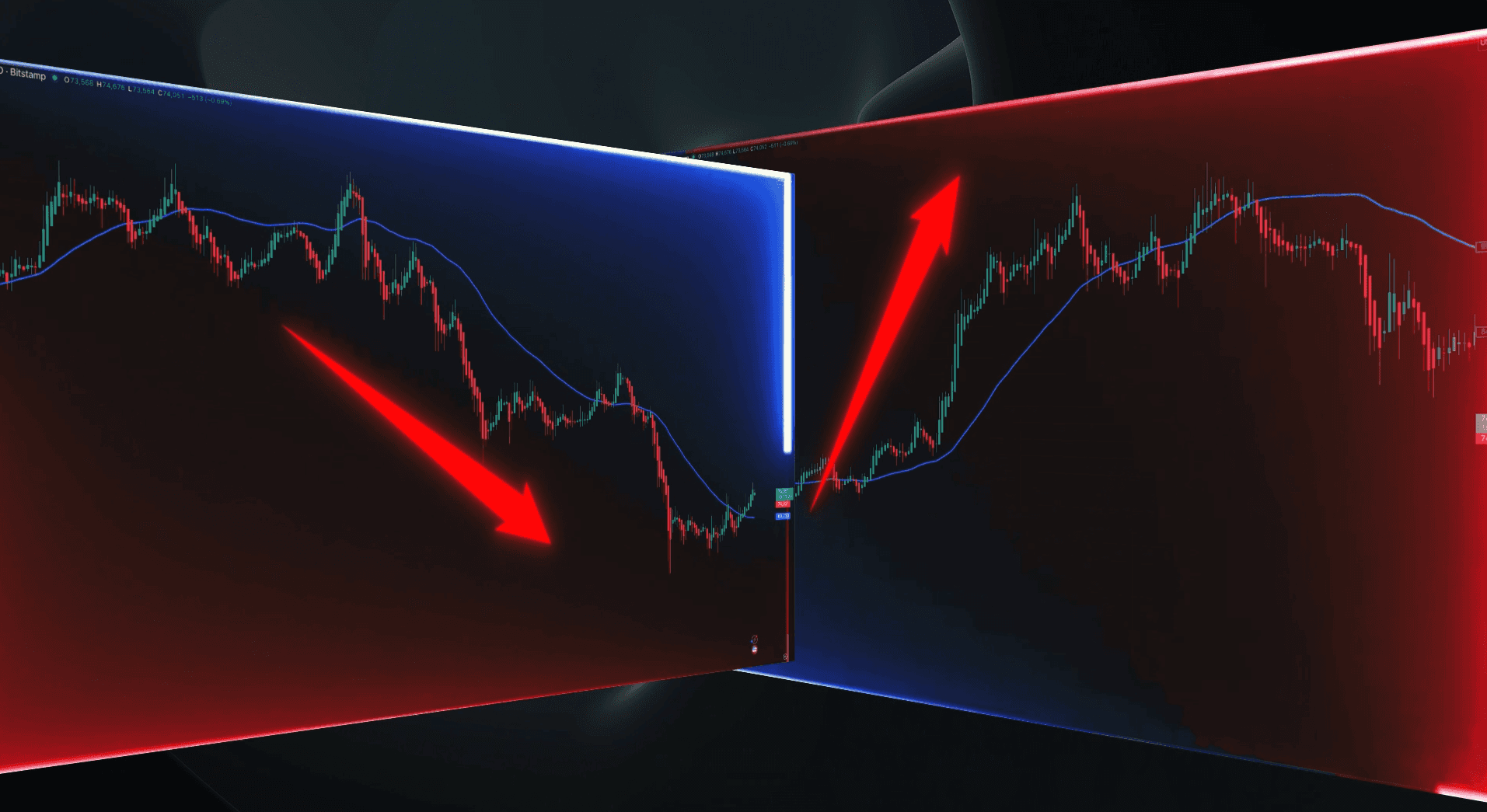
Many traders obsess over win rates while neglecting the fundamental necessity of a high risk-reward ratio. The "Triple-Filter" strategy discussed today relies on multi-dimensional confirmation to build a robust trading model designed for high expectancy.
The Triple-Filter Mechanism
Trend Director (SuperTrend + Heikin Ashi):
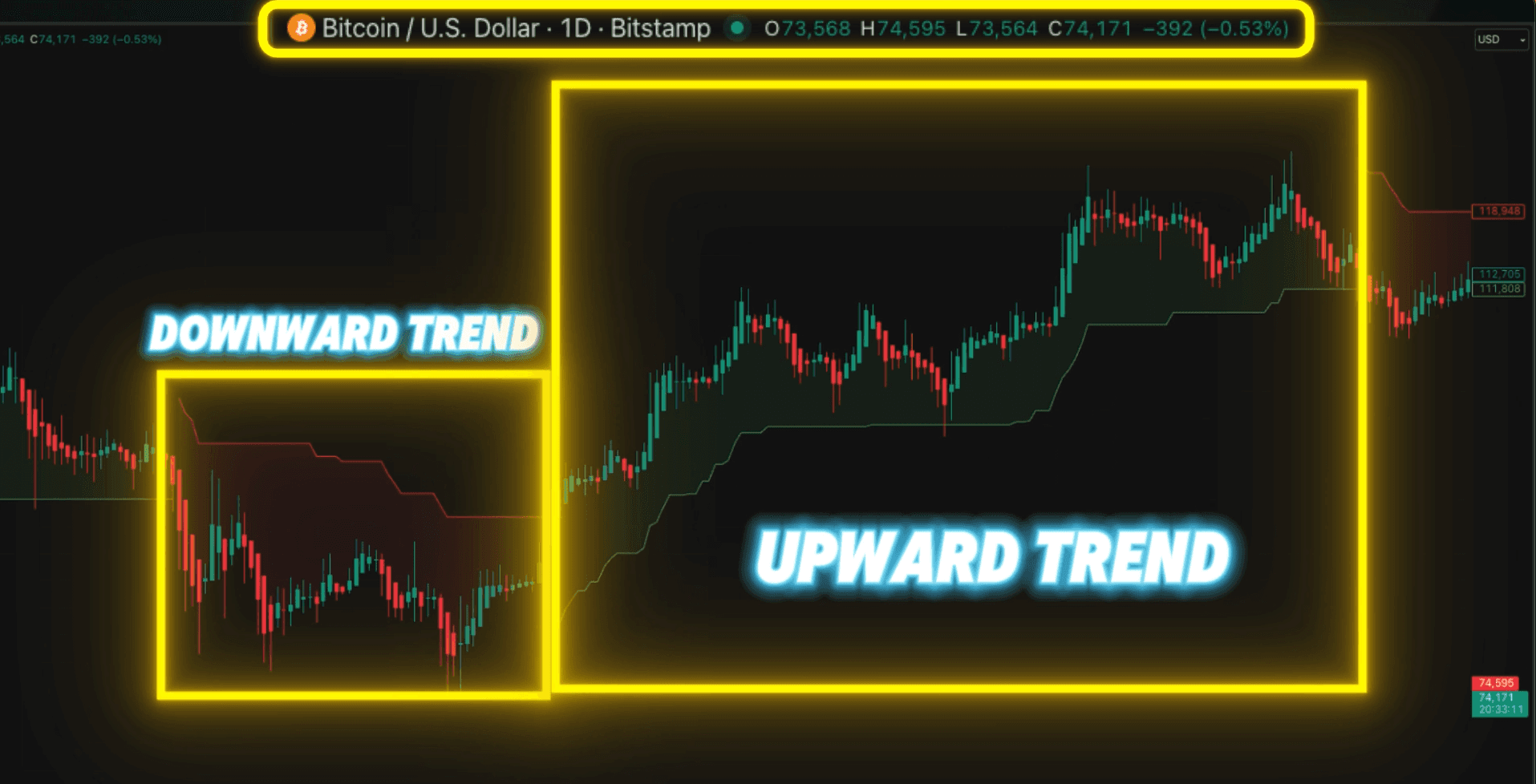
SuperTrend serves as the first filter, responsible for identifying the macro trend direction. Green represents an uptrend, and red represents a downtrend.
At the same time, we need to replace the traditional candlestick chart with Heikin Ashi. The core function of Heikin Ashi is to smooth price fluctuations and filter out many false signals generated by market noise. Compared to traditional candlesticks, Heikin Ashi presents trend continuity more clearly and reduces false judgments during ranging markets.
Long-term Structure (EMA120):
EMA120 (120-period Exponential Moving Average) serves as the second filter, providing a structural defense line for the long-term trend.
The rule is simple and non-negotiable: Only go long when price is above EMA120; only go short when price is below EMA120.
The purpose of this filter is to prevent counter-trend trading. Even if SuperTrend and Heikin Ashi show strong rebound signals, if that rebound occurs below EMA120, the strategy will treat it as a technical rebound in a bear market rather than a trend reversal, and no long entry will be triggered.
Entry Sniper (CCI Stochastic):
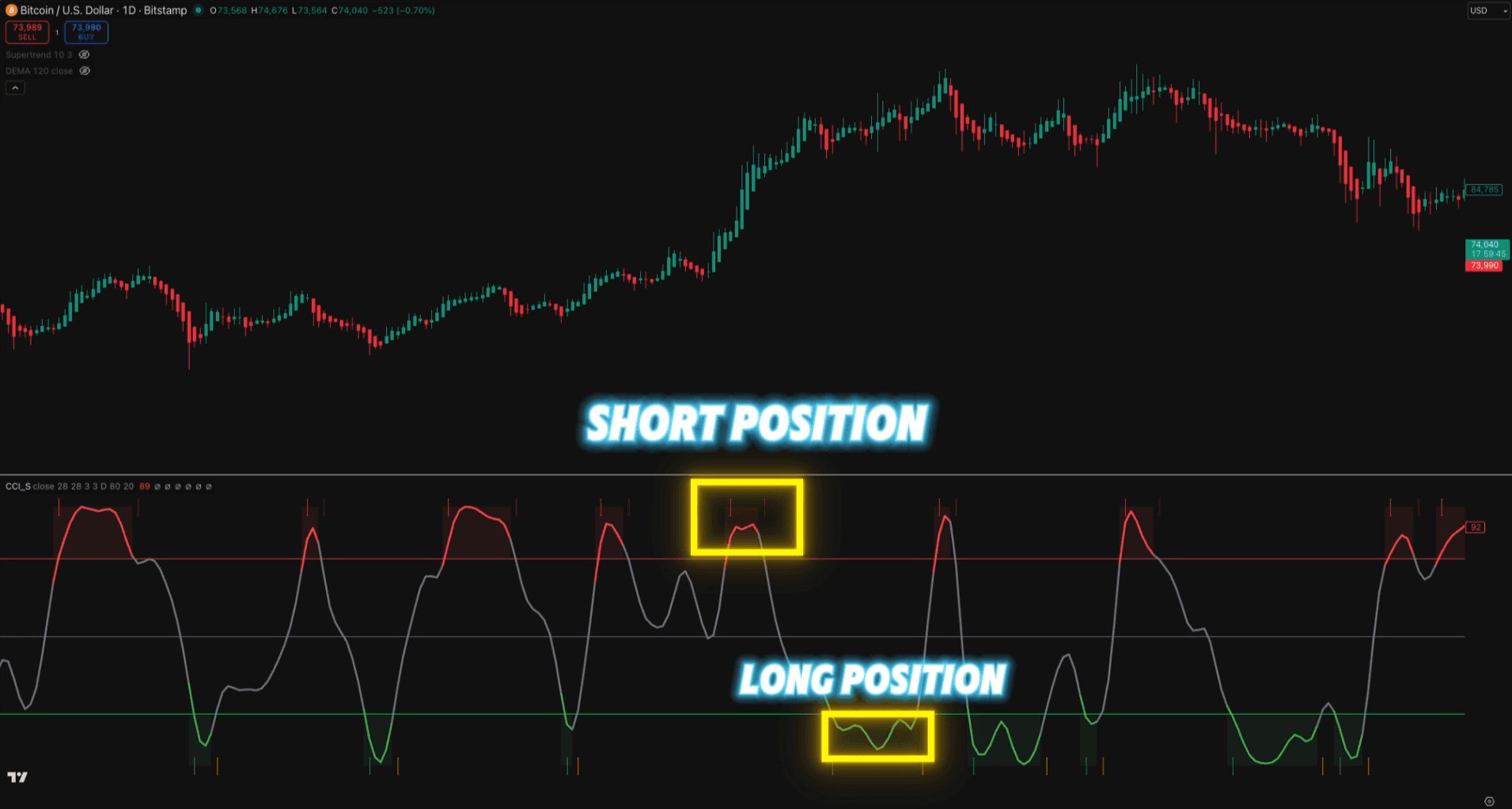
CCI Stochastic combines the strengths of both CCI (Commodity Channel Index) and the Stochastic Oscillator, specifically designed to capture trend turning points in short-term overbought and oversold zones.
Long Trigger Condition: When CCI Stochastic enters the oversold zone (below 20) and the chart shows two consecutive upward arrows, this is the signal to enter a long position.
Short Trigger Condition: When CCI Stochastic enters the overbought zone (above 80) and the chart shows two consecutive downward arrows, this is the signal to enter a short position.
Requiring "two consecutive arrows" rather than a single arrow filters out false reversal signals during extreme market conditions. A single arrow may be just brief market noise; two consecutive arrows indicate that momentum reversal has received initial confirmation, significantly improving signal reliability.
Backtesting and Performance Verification
Accounting for trading costs (0.01% commission per transaction), backtesting results across various assets indicate the following performance profiles:
Asset | Timeframe | Performance Insights |
Bitcoin (BTC) | 1H | Low win rate, but a steady upward-sloping equity curve with minimal drawdown. |
S&P 500 (SPX) | 1H | Exceptional performance; low drawdown typical of high risk-reward systems. |
Silver (Spot) | 1H | 309% return in the 1H timeframe with effectively zero maximum drawdown (-0.00%). |
Strategic Insights and Execution
System Profile: This is a classic "low win rate, high risk-reward" system. You must possess the psychological discipline to absorb consecutive losses, waiting for the system to capture significant trends.
Heikin Ashi Considerations: This strategy is based on Heikin Ashi calculations. While effective for filtering range-bound noise, remember that execution should be reconciled with real-time market price action.
Timeframe Adaptability: Performance data demonstrates that the strategy excels on the 1-hour (1H) timeframe compared to ultra-short-term (5min/15min) charts. Gains in win rate and overall return are significantly higher when capturing major structural trends over larger timeframes.
Conclusion:
This strategy demonstrates consistent excellence across multiple asset classes on the 1-hour timeframe, making it ideal for capturing medium-to-long-term trends. The key to implementation lies in the strict execution of the triple-filter criteria and the discipline to remain sidelined when market conditions fail to meet these structural requirements.