First
Last
email@email.com
Market Recap & Arakawa Quant Market Insights
Market
August 7, 2026


AQ Team
Driving superior alpha through quantitative research and systematic execution.
Summary
- U.S. equities rebounded this week as stronger corporate earnings, lower oil prices, and hopes for de-escalation in the Middle East helped offset much of July’s technology-sector weakness. The Dow Jones Industrial Average and S&P 500 both reached record closing levels on Tuesday.
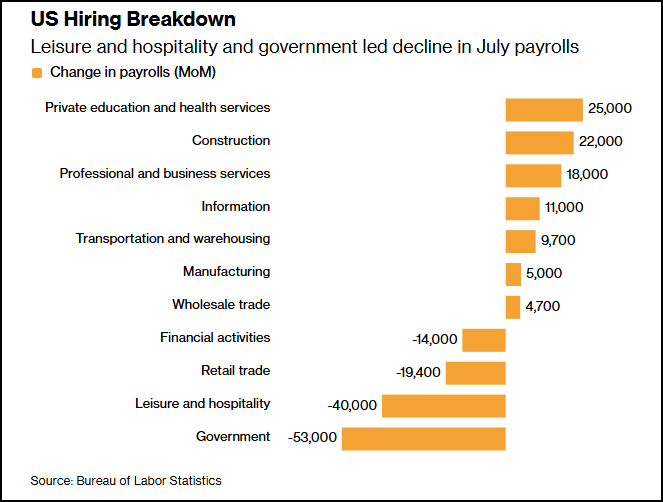
- July payrolls unexpectedly declined by 23,000, while May and June employment figures were revised down by a combined 103,000. The weaker labor data reduced expectations for further Federal Reserve tightening and pushed Treasury yields lower.
- Second-quarter earnings continue to provide fundamental support for the market. Among the companies in the Arakawa Quant portfolio that have reported so far, 24 of 32, or 75%, have exceeded earnings expectations, with Wayfair and Twilio both gaining more than 20% following strong results.
- Technology and AI infrastructure stocks regained leadership as investors responded positively to strong AI-related earnings and spending expectations, although the market remains selective toward companies with weaker monetization prospects or less convincing forward guidance.
- Attention now turns to next week’s major technology earnings and July CPI data, both of which could have a significant influence on risk appetite, interest-rate expectations, and the broader market direction.
Market Overview: Wall Street Gets a Payroll Pivot and an Earnings Boost
U.S. equities moved higher over the past week, reversing a meaningful portion of the technology-led weakness seen throughout July. Strong corporate earnings, improving expectations around Middle East de-escalation, and lower oil prices combined to improve investor risk appetite and provide a broader lift across the equity market.
The rally began early in the week, with the Dow Jones Industrial Average, S&P 500, and Nasdaq Composite all advancing. On Tuesday, both the Dow and S&P 500 reached record closing levels as investors responded positively to renewed diplomatic efforts between the United States and Iran, while a broad set of corporate earnings releases provided additional support for equity valuations.
The improvement in sentiment was not limited to the largest technology companies. Investors increasingly looked toward earnings quality and forward guidance as important indicators of whether the market could sustain its recovery following July’s weakness.
A particularly important development came from the U.S. labor market.U.S. stocks advanced again on Friday morning after July payrolls unexpectedly declined by 23,000, significantly below the consensus expectation for an increase of 88,000. At the same time, employment figures for May and June were revised downward by a combined 103,000 jobs.
The revisions were particularly important because they suggested that the labor market may have been weaker than previously indicated. The unemployment rate declined to 4.1%, but the move was largely driven by a decline in labor-force participation, which fell to 61.4%. Meanwhile, annual wage growth slowed to 3.2%, its weakest pace in more than five years.
Taken together, the data reduced concerns that the Federal Reserve would need to maintain or increase monetary-policy restrictions to address an overheating labor market. Treasury yields subsequently moved lower across the curve as investors reassessed the outlook for interest rates.The market’s attention is now shifting toward inflation.With employment conditions showing signs of cooling, the next major question is whether inflation is also moving sustainably lower. The July Consumer Price Index, scheduled for release next week, could therefore become a major catalyst for both bond and equity markets.
Technology and AI Regain Leadership
Technology stocks regained some of their leadership during the week as investors responded positively to a series of AI-related earnings results and forward-looking spending plans.The broader AI investment cycle remains one of the most important structural themes supporting U.S. equities. Major companies continue to invest heavily in computing infrastructure, cloud capacity, networking equipment, and data centers, providing demand across a wide range of technology and semiconductor businesses.
However, the market is becoming increasingly selective.The earlier stages of the AI rally benefited a broad group of companies associated with artificial intelligence. As valuations have increased and investors have gained more information about actual AI spending and monetization, the market is now placing greater emphasis on the quality of individual companies.Businesses with clear exposure to AI infrastructure, strong revenue visibility, improving profitability, and credible monetization strategies continue to attract capital. Companies where AI exposure remains largely conceptual, or where forward guidance fails to justify elevated valuations, face considerably greater scrutiny.
This distinction is becoming increasingly important for quantitative investors.Rather than treating all AI-related companies as a single investment category, Arakawa Quant evaluates companies based on their underlying financial performance, earnings trajectory, market behavior, and valuation. The continued expansion of AI infrastructure can create opportunities across the supply chain, but the strongest opportunities may increasingly be concentrated in companies demonstrating measurable financial benefits from the trend.
U.S. Manufacturing Also Signals Continued Economic Resilience
Another important development this week came from the U.S. manufacturing sector.U.S. manufacturing activity expanded at its fastest pace in more than four years during July, with demand remaining strong across aerospace, defense, machinery, electronics, and AI infrastructure.The latest data marked the seventh consecutive month of expansion, providing additional evidence that parts of the U.S. economy remain resilient despite tighter financial conditions and ongoing uncertainty surrounding monetary policy.The strength of industrial demand is particularly relevant to the current market environment because the AI investment cycle is increasingly connected to traditional manufacturing and industrial infrastructure.Data centers require not only semiconductors and computing systems but also power equipment, cooling systems, networking hardware, electrical components, construction services, and other industrial products.
As a result, continued investment in AI infrastructure could support a much broader economic ecosystem than the largest technology companies alone.For investors, this creates an increasingly important distinction between short-term technology sentiment and the longer-term capital investment cycle supporting AI infrastructure.
Energy Markets Remain Highly Sensitive to Middle East Developments
The Energy sector experienced considerable volatility throughout the week as investors responded to rapidly changing expectations surrounding Middle East supply risks.
Crude oil prices initially declined following reports that Iran and Oman could reach a temporary agreement that might facilitate shipping through the Strait of Hormuz. Any improvement in the situation around the Strait would reduce concerns about supply disruptions and the possibility of oil becoming trapped in the region.
That optimism faded later in the week.Oil prices rebounded sharply on Thursday after reports suggested Iran could restrict vessel traffic through the Strait, while escalating regional conflict renewed concerns over potential supply disruptions.The Strait of Hormuz remains one of the world's most important energy transportation chokepoints, meaning changes in its accessibility can have an immediate impact on crude prices and energy-related equities. Despite the late-week rebound in crude prices, the Energy sector ultimately finished lower for the week.The latest price action highlights the continued sensitivity of energy markets to geopolitical developments. For investors, the key issue is not simply the direction of oil prices, but how persistent supply disruptions could influence inflation and, in turn, the Federal Reserve’s policy decisions.
Arakawa Quant Perspective: Fundamentals Continue to Matter
The current market environment demonstrates why systematic analysis can be particularly valuable when leadership and investor sentiment change rapidly.During periods of heightened volatility, price movements can sometimes become disconnected from underlying business fundamentals. Investors may respond to macroeconomic headlines, sector rotations, or short-term positioning changes before the impact on corporate earnings becomes clear.
Arakawa Quant’s approach is designed to evaluate these developments through a broader quantitative framework.Rather than relying on a single indicator, the framework considers the interaction between earnings performance, growth expectations, profitability, valuation, analyst revisions, and market momentum. This allows individual companies to be evaluated based on their underlying financial trajectory rather than simply their exposure to a popular market theme.The second-quarter earnings season is currently providing an important test of that process.Among the companies in the Arakawa Quant portfolio that have reported second-quarter results so far, 24 of 32, or 75%, have exceeded earnings expectations.This level of earnings outperformance provides an important fundamental counterweight to recent market volatility. While individual stocks can experience significant short-term price movements, stronger-than-expected earnings can help establish a foundation for future valuation support.

Earnings Season Highlights the Importance of Company-Specific Fundamentals
Several portfolio companies delivered particularly strong performances following their latest earnings reports.Wayfair was among the most notable examples, with the stock rising as much as 30% following a double beat on earnings and revenue. Twilio also gained more than 20% after reporting a strong quarter and raising its forward guidance.These moves demonstrate how quickly market sentiment can change when companies provide evidence that their underlying businesses are performing better than expected.
At the same time, approximately 30 companies in the portfolio were trading in positive territory on a trailing one-week basis at the time of analysis.The recent performance also highlights the renewed strength of the AI infrastructure theme.Fabrinet, Lumentum, TTM Technologies, and Credo have all benefited from expectations for accelerating demand across high-speed optical networking, data-center connectivity, and related hardware. Lumentum’s recent strength has been supported by continued hyperscaler AI spending and increasing demand for optical infrastructure associated with Nvidia-driven computing growth. TTM Technologies also benefited from strong second-quarter results, while Wayfair’s revenue and earnings beat provided an independent company-specific catalyst. The common factor across these businesses is not simply that they are associated with AI. Rather, they are positioned within areas where increased AI infrastructure spending can translate into measurable demand for products and services. This distinction is increasingly important as the market matures.
Weak Performers Show Why Earnings Quality Matters
The weaker performers during the week also provided useful insight into the current market environment. AppLovin and Vistance Networks declined following disappointing second-quarter results. AppLovin missed revenue expectations and provided guidance slightly below consensus, while Vistance Networks missed on earnings amid weaker sales, higher memory costs, and lower adjusted EBITDA.
These reactions illustrate the market’s current sensitivity to forward expectations.When valuations and investor expectations are elevated, even relatively modest disappointments can trigger significant price adjustments. Strong historical performance alone is not necessarily enough to support a stock if future growth expectations begin to deteriorate.Par Pacific was also pressured by lower crude prices during the week. The prospect of restored shipping through the Strait of Hormuz reduced immediate concerns around supply disruptions, weighing on energy-related companies.BrightSpring and StoneX, meanwhile, appeared to give back some recent gains despite solid underlying results.
This divergence between business performance and short-term stock price movement is important. A company can deliver strong earnings while its shares decline if investors are taking profits, reducing exposure, or reassessing previous valuation assumptions.For quantitative investors, such situations reinforce the importance of separating fundamental information from short-term price behavior.
What to Watch Next Week
Markets enter next week with two major catalysts: technology earnings and the July CPI report. CoreWeave, Cisco, and Applied Materials are scheduled to report, offering further insight into AI infrastructure demand, networking activity, and semiconductor investment. Strong results and guidance could support the recent technology rebound, while weaker expectations may renew pressure on the sector.
The July CPI report will also be critical for the Federal Reserve outlook. Softer inflation could reinforce expectations for lower rates and support growth stocks, while persistent price pressures could keep yields elevated and weigh on risk appetite.
Arakawa Quant Outlook
This week’s rebound highlights how quickly market sentiment can shift when earnings, labor data, Treasury yields, and geopolitical developments move in the same direction.
Despite continued volatility, 75% of reporting portfolio companies have exceeded second-quarter earnings expectations, suggesting that underlying fundamentals remain resilient. As earnings season continues, Arakawa Quant will continue focusing on the relationship between fundamentals, valuation, earnings expectations, and price momentum rather than short-term market noise.
With major earnings and CPI ahead, further volatility is likely, making a disciplined, data-driven approach increasingly important.
Data provides the map, statistics provide the compass, but execution provides the destination.
AQ Team
Arakawa Quant Research Team
Subscribe to our newsletter
Get the insider insights you need to scale, straight to your inbox.




Decode the Market. Quantify Your Edge.
Elite quantitative models and real-time execution signals. Trade with institutional power.

Copyright © 2026 Hong Kong Arakawa Limited. All rights reserved.


%2C%20Color%3DNegative.svg)