First
Last
email@email.com
Trend-Following Strategies: Building an Edge with Systematic Systems
Strategy
May 2, 2026


Skye
Decoding institutional Liquidity Sweeps
Abstract:
Long-term losses in retail forex trading often stem from the lack of a systemic edge. This article evaluates a trend-following strategy based on a triple-confirmation mechanism: moving average trend filters, zero-line filtered MACD, and ATR-based dynamic profit management. Backtesting results highlight the strategy's strength in long-term trends and its limitations in low-volatility markets.
Ninety percent of retail forex traders fail to achieve long-term profitability, not because they cannot predict the market, but because they lack a systematic advantage. Today, we dissect a trend-following strategy built upon three layers of confirmation and analyze its performance across various currency pairs and timeframes.
Triple-Confirmation Mechanism
Trend Filter (Moving Averages):
- Tools: 5-period, 13-period, and 20-period Exponential Moving Averages (EMA)
- Long Condition: Price must trade above the 20 EMA, with the 5 EMA and 13 EMA in bullish alignment (5 EMA > 13 EMA > 20 EMA)
- Short Condition: Price must trade below the 20 EMA, with the 5 EMA and 13 EMA in bearish alignment (5 EMA < 13 EMA < 20 EMA)

Logic: The 20 EMA serves as the dividing line for the medium-term trend. Trading long above the 20 EMA yields a significantly higher win rate than bottom-fishing counter-trend. Backtests show that when price deviates more than 0.5x ATR from the 20 EMA on the daily timeframe, the probability of trend continuation increases by approximately 35% to 40% compared to random entry.
Momentum Confirmation (MACD Zero-Line Filter):
- Long condition: MACD fast line crosses above the signal line, with both lines above the zero line.
- Short condition: MACD fast line crosses below the signal line, with both lines below the zero line.
- The core significance of this filter is as follows: a price breakout above a moving average only signals a structural change, but does not confirm whether that change has sufficient momentum support. The MACD zero-line filter requires that the fast line and slow line form a cross on the same side of the zero line, meaning the trend already has adequate momentum. If the cross occurs near the zero line or during a zero-line crossover, momentum is considered insufficient, and no entry should be made.
Risk Management (ATR Dynamic Profit Taking)
Set the initial stop loss as the smaller of 1x ATR or a 2% hard stop. As profits expand, take profits in stages at 1x to 5x ATR, and use an ATR trailing stop mechanism to prevent drawdowns.
ATR (Average True Range) is a core tool for measuring market volatility. Volatility characteristics differ significantly across currency pairs and timeframes. Using fixed-point profit and loss targets leads to unstable performance across different instruments. The advantage of ATR dynamic management is that when market volatility rises, profit and loss distances automatically expand to avoid being stopped out by normal fluctuations. When volatility falls, these distances automatically contract to ensure profits are not excessively given back.
The logic behind staged profit taking is as follows: first, lock in partial profits at 1x ATR to ensure the strategy achieves positive returns on most trades. Second, continue locking in profits at 2x ATR to further consolidate floating gains. Third, reduce the position again at 3x ATR, at which point most of the position has already exited with profit. The remaining position is either taken profit at 5x ATR or managed with a trailing stop that follows the trend until reversal. This design ensures that even if the trend reverses mid-course, the strategy retains substantial realized profits.
Backtesting Performance and Market Adaptability
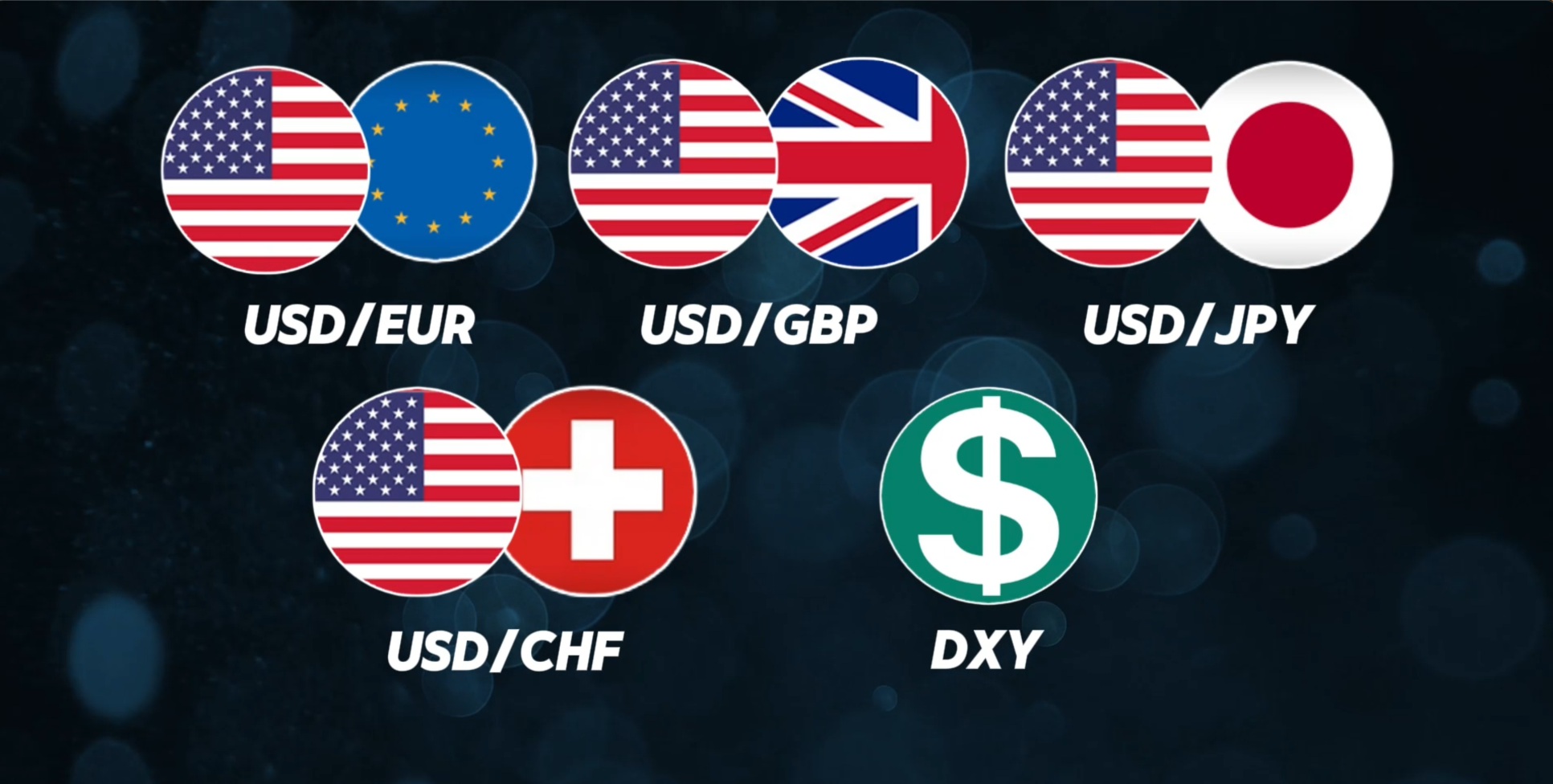
Our backtesting across the Dollar Index (DXY) and major pairs (USD/JPY, USD/CHF, GBP/USD, EUR/USD) reveals the following:
- DXY(1D):54.5% Return, 54.5% Win Rate, 0 Max Drawdown.
- USD/JPY(1D): 72.07% Return, vastly outperforming the benchmark, 0 Max Drawdown.
- GBP/USD(1D): 52.35% Win Rate, steady upward-sloping equity curve.
- EUR/USD(4H): Best performance observed in the 4H timeframe.

Strategic Execution Guidelines:
Timeframe Selection: This strategy excels on Daily (1D) and 4-hour (4H) charts, where it effectively filters out market noise. Performance degrades on lower timeframes (e.g., 1H) due to insufficient volatility for trend development.
Asset Selection: The strategy performs best on high-trend-beta assets such as the DXY and USD/JPY. It proves inefficient in pairs like the Swiss Franc, where price behavior is often range-bound or characterized by low volatility.
Conclusion:
The essence of trend-following lies in abandoning noise during range-bound periods to capture dividends during trends. The efficacy of this strategy is highly dependent on market volatility and trend strength. In practice, deploy this system primarily on assets with clear long-term trends and adjust ATR multipliers dynamically to maintain the balance between capital protection and growth.
In an era of information overflow, alpha lies in asymmetric execution, not intuitive consensus.
Skye
SMC Market Analyst
Subscribe to our newsletter
Get the insider insights you need to scale, straight to your inbox.




Decode the Market. Quantify Your Edge.
Elite quantitative models and real-time execution signals. Trade with institutional power.

Copyright © 2026 Hong Kong Arakawa Limited. All rights reserved.


%2C%20Color%3DNegative.svg)