
Search All

Arakawa Quant Picks

載入中...

Editor's Pick

Jun 15, 2026

Last Friday’s tech volatility spilled into this week, forcing markets to balance hot CPI data, geopolitical tensions, and secular valuation narratives. This review delivers a rigorous look at how the ArakawaQuant portfolio leveraged its disciplined multi-factor framework to navigate the whipsaw action and why market drawdowns historically carve out premium entry points.


May 21, 2026

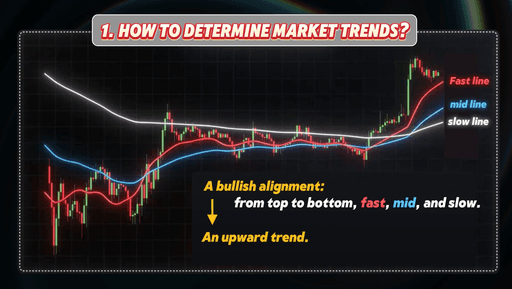
Success in financial trading lies not in predicting the future, but in identifying market structure and executing high-probability strategies. This article provides an in-depth breakdown of the "Three-Step Observation Method"—a system based on moving averages, MACD, and momentum analysis—designed to help traders establish a standardized, rule-based process and transition from emotional trading to rational execution.

Latest

Last Friday’s tech volatility spilled into this week, forcing markets to balance hot CPI data, geopolitical tensions, and secular valuation narratives. This review delivers a rigorous look at how the ArakawaQuant portfolio leveraged its disciplined multi-factor framework to navigate the whipsaw action and why market drawdowns historically carve out premium entry points.
Last Friday’s tech volatility spilled into this week, forcing markets to balance hot CPI data, geopolitical tensions, and secular valuation narratives. This review delivers a rigorous look at how the ArakawaQuant portfolio leveraged its disciplined multi-factor framework to navigate the whipsaw action and why market drawdowns historically carve out premium entry points.

A 6-Month Probabilistic Outlook Anchored on SPY Dominant Cycles, Block-Bootstrap Monte Carlo, and Conditional Phase Analogs

A 6-Month Probabilistic Outlook Anchored on SPY Dominant Cycles, Block-Bootstrap Monte Carlo, and Conditional Phase Analogs

An in-depth analysis of Arakawa Quant's multi-factor quantitative resilience, the algorithmic rebalancing logic behind RCL, and the implementation of a barbell allocation strategy amid global risk-off rotations and robust macro employment data.

An in-depth analysis of Arakawa Quant's multi-factor quantitative resilience, the algorithmic rebalancing logic behind RCL, and the implementation of a barbell allocation strategy amid global risk-off rotations and robust macro employment data.

Driven by an extended sector-relative valuation premium, downward consensus revisions by analysts, and a Quant "Hold" rating that has hit our strict 180-day temporal boundary, Royal Caribbean Cruises Ltd. (RCL) has been programmatically removed from the portfolio under our disciplined exit protocol.

Driven by an extended sector-relative valuation premium, downward consensus revisions by analysts, and a Quant "Hold" rating that has hit our strict 180-day temporal boundary, Royal Caribbean Cruises Ltd. (RCL) has been programmatically removed from the portfolio under our disciplined exit protocol.

Driven by soaring AI infrastructure demand, flash memory giant Sandisk (SNDK) has broken through traditional cyclical constraints. Combining strong Q3 fundamentals with a deep valuation discount, SNDK stands out as a core AI hardware holding in our quantitative portfolio.

Driven by soaring AI infrastructure demand, flash memory giant Sandisk (SNDK) has broken through traditional cyclical constraints. Combining strong Q3 fundamentals with a deep valuation discount, SNDK stands out as a core AI hardware holding in our quantitative portfolio.

How can you systematically improve trading expectancy? This article analyzes a trend-following strategy combining the Chandelier Exit and ZLSMA indicators. By utilizing Heikin Ashi candles to filter noise, this model demonstrates high win rates and low drawdowns across multiple asset classes, including equities, commodities, and crypto.

How can you systematically improve trading expectancy? This article analyzes a trend-following strategy combining the Chandelier Exit and ZLSMA indicators. By utilizing Heikin Ashi candles to filter noise, this model demonstrates high win rates and low drawdowns across multiple asset classes, including equities, commodities, and crypto.

Trading losses often stem from conflicting indicators. This article provides a deep dive into dismantling and rebuilding MACD and KDJ to create the "MJ Indicator." By utilizing zero-line resonance to achieve perfect synchronization between momentum and direction, this system helps you filter out false breakouts and build disciplined trading habits.

Trading losses often stem from conflicting indicators. This article provides a deep dive into dismantling and rebuilding MACD and KDJ to create the "MJ Indicator." By utilizing zero-line resonance to achieve perfect synchronization between momentum and direction, this system helps you filter out false breakouts and build disciplined trading habits.

Retail traders lose because they trade the open. Smart money wins because they wait for the trap. Every day at 10:00 AM ET, the market undergoes a massive liquidity transfer. This isn't random—it's the classic Accumulation-Manipulation-Distribution (AMD) cycle playing out in real-time. If you want to stop being the liquidity, you need to start trading with it. Here is the exact playbook.

Retail traders lose because they trade the open. Smart money wins because they wait for the trap. Every day at 10:00 AM ET, the market undergoes a massive liquidity transfer. This isn't random—it's the classic Accumulation-Manipulation-Distribution (AMD) cycle playing out in real-time. If you want to stop being the liquidity, you need to start trading with it. Here is the exact playbook.